Recent advancements in battery and sensor technology have enabled collecting many new streams of health-related data. The reduction in cost and increase in energy density of lithium-ion batteries, driven by optimized chemistry and manufacturing scale, has dropped battery prices by nearly 90% while doubling storage capacity. Innovations in multi-wavelength optics has led to the creation of new types of devices for collecting clinical-grade insights about biophysical activity. Parallel breakthroughs in nanomaterials and flexible electronics, such as graphene meshes and microneedle arrays, have created “skin-like” interfaces that can capture complex biochemical and physiological data without bulky hardware and are the next wave of sensor-technology that the medical domain must plan for.
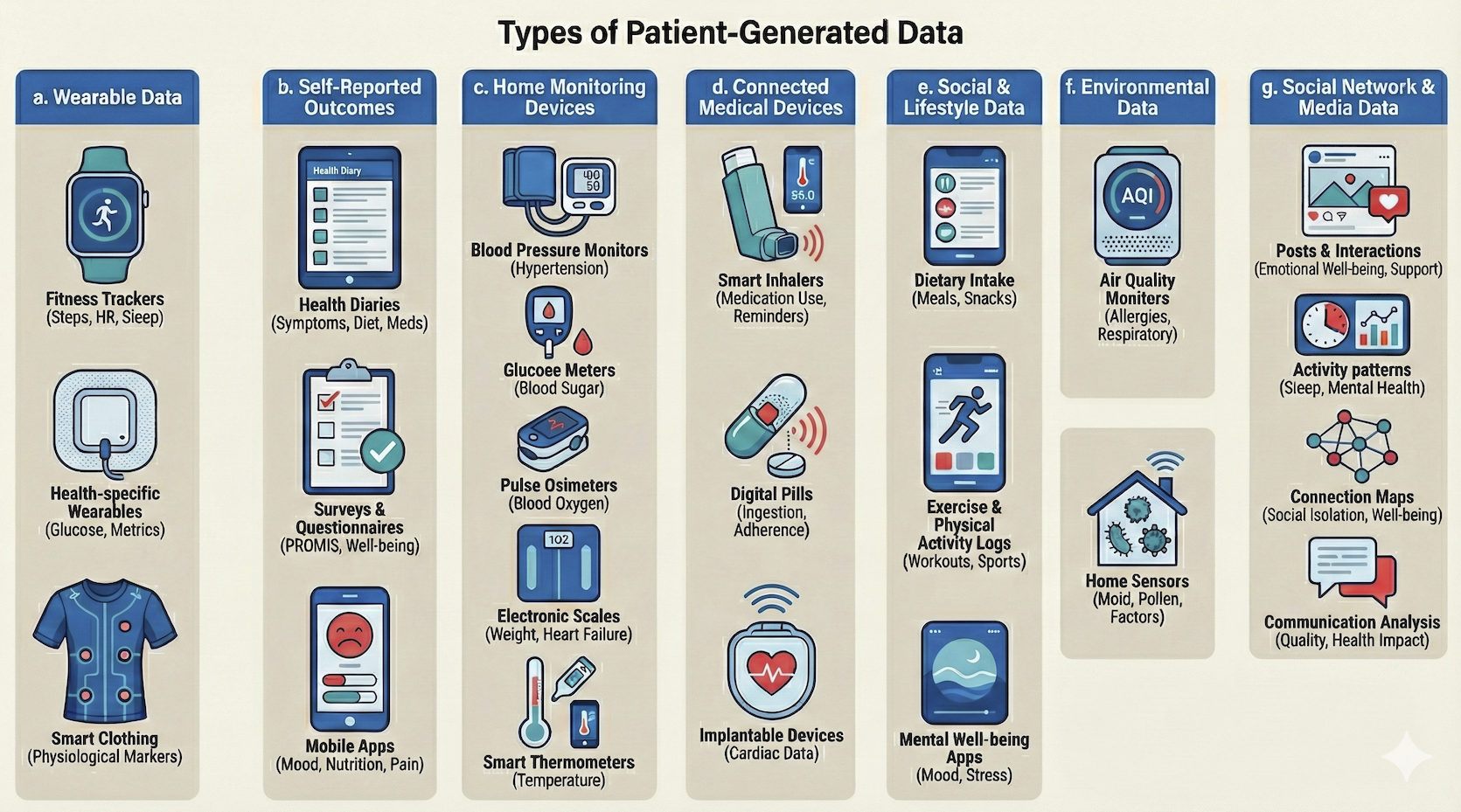
Key technological advances driving this shift include:
Clinical-Grade Photoplethysmography (PPG) & ECG: Modern consumer sensors have moved beyond simple heart rate tracking to FDA-cleared arrhythmia detection (AFib), blood oxygen saturation ($SpO_2$), and respiratory rate variability. Multi-wavelength PPG sensors now allow for deeper tissue penetration, improving accuracy across diverse skin tones and measuring novel metrics like blood pressure proxies.
Electrochemical Sensing (Biochemical Profiling): The “Holy Grail” of non-invasive sensing has expanded beyond glucose. New microneedle arrays and sweat-sensing patches can now continuously monitor lactate (muscle fatigue), cortisol (stress), electrolytes, and hydration levels in real-time.
Contactless & Ambient Sensing: Utilizing radio-frequency (RF) signals and Wi-Fi channel state information (CSI), new systems can passively monitor respiration rates, sleep stages, and gait speed without the patient wearing any device. This “zero-burden” monitoring is particularly transformative for elder care and frailty assessment.
Flexible Hybrid Electronics (Electronic Skin): Ultrathin, stretchable circuits (“e-tattoos”) using graphene or gold nanomesh can conform to the skin’s microstructure. These devices minimize motion artifacts and enable high-fidelity recording of electromyography (EMG) and skin impedance.